Guide
How to add nutrition information to a restaurant menu
6 min read
More guests glance at calories before they glance at prices. You do not need a dietitian on staff or a redesigned menu to answer them. A simple calorie line next to each dish, kept current, covers what most diners actually want to know.
Decide what to show
For most independent restaurants, calories per dish are the useful core. Full panels of fat, sodium, and vitamins belong on packaged food, not on a one-page bistro menu where they bury the dishes. Guests deciding between two mains want one comparable number, not a lab report — and the kitchen can actually keep one number honest across a busy week.
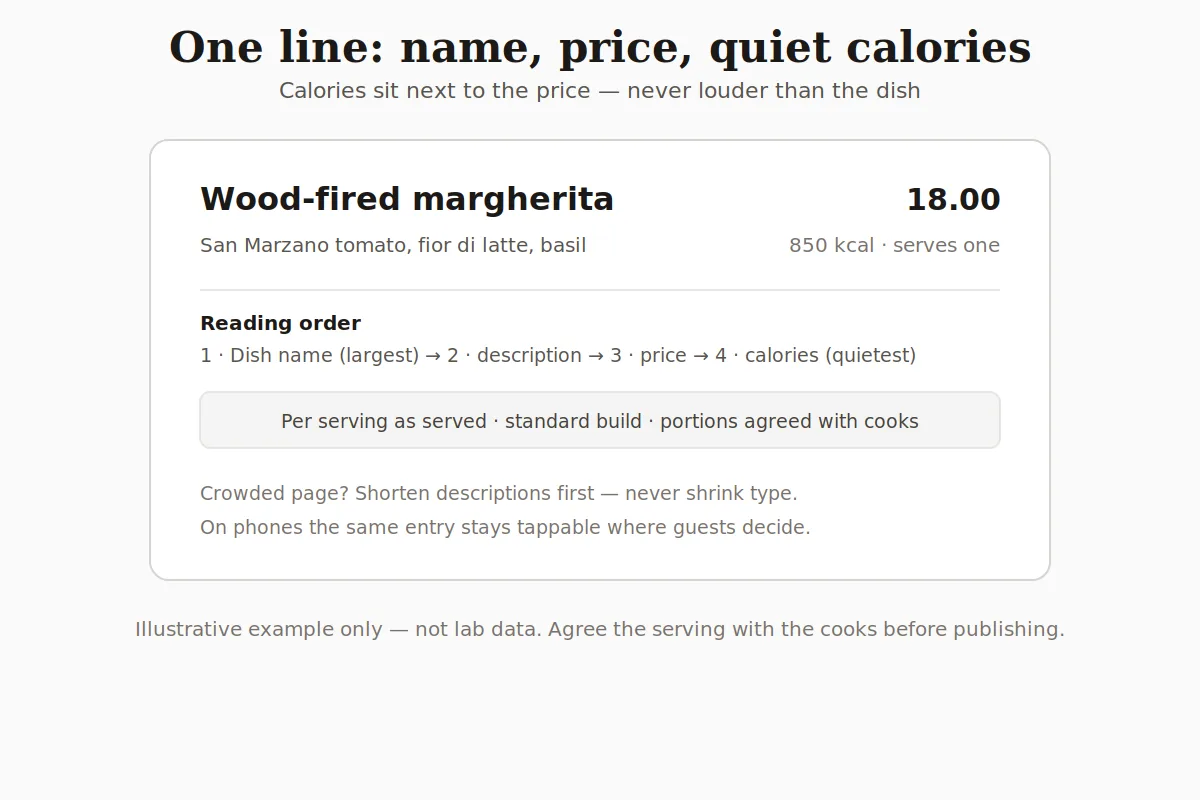
State the basis plainly: per serving as served. If a dish varies, give the standard build and plate it that way every time. Illustrative example: Wood-fired margherita (serves one) — 850 kcal. The number is only useful if the kitchen plates the same portion every time, so agree the serving with the cooks before you publish anything. Write the basis on the menu once — per serving as served — and guests will read every line the same way.
Get numbers you can stand behind
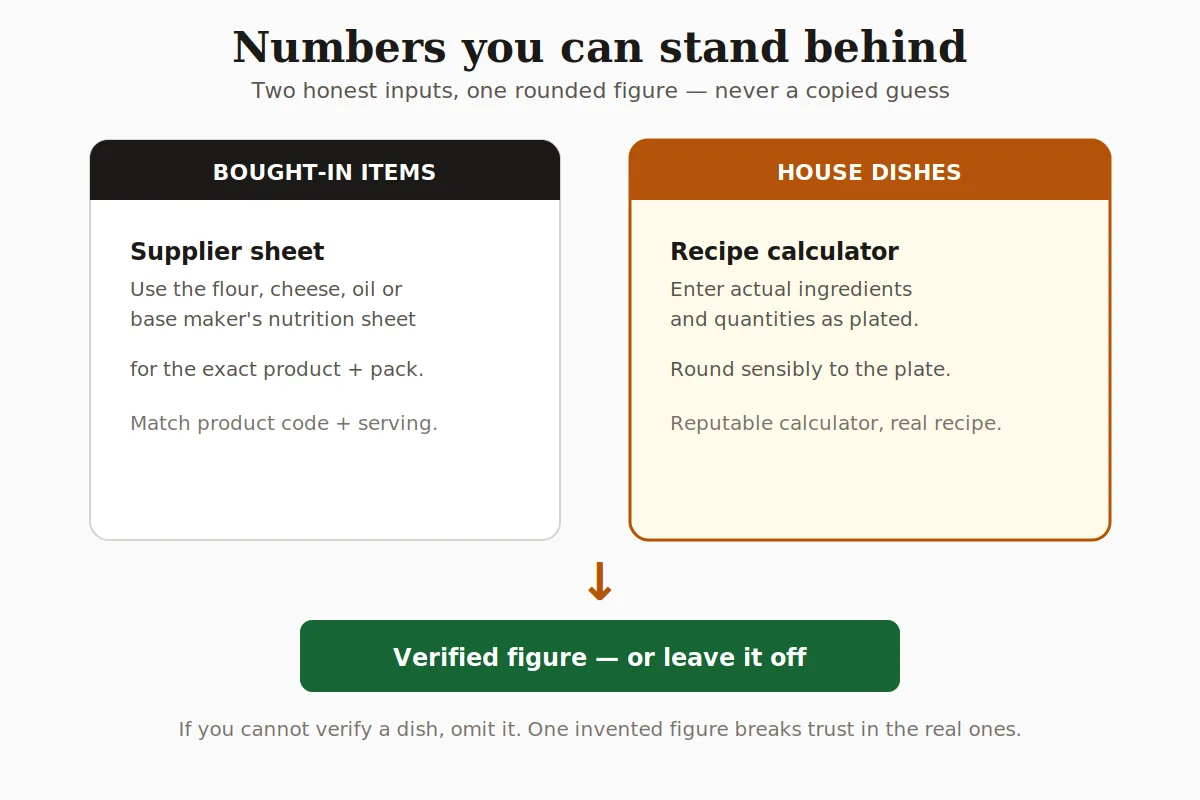
Use supplier nutrition sheets for bought-in items and a reputable recipe calculator for house dishes, entering the actual ingredients and quantities. A bought-in base, flour, cheese, or oil already has a tested sheet — match the exact product and pack size rather than a lookalike. For house dishes, enter what the line actually uses: the real oil quantity, the real cheese weight, the garnish and bread that travel with the plate. Small unmeasured extras are where calorie counts quietly drift.
Round sensibly and never copy a number from a different restaurant's menu. Their portion, recipe, and fryer are not yours. If you cannot verify a dish, leave it off rather than guessing; one invented figure destroys trust in all the real ones. Requirements differ by place and by business size, so check your local rules before you treat any of this as legal advice — this guide covers menu craft, not compliance.
Lay it out so people can still read the menu
Put the calorie figure in a smaller, quieter style next to the price, never louder than the dish name. The reading order on each line should feel obvious: the dish tempts first, the price follows, the calories inform without interrupting. Keep the line short: name, one concrete description, price, calories. A tight description does double duty here — it leaves physical room for the number and keeps the eye moving down the page instead of stalling on a crowded row.
If the page starts to feel crowded, shorten descriptions before you shrink type. Type that drops below comfortable arm's-length reading punishes every guest, while a shorter description only asks the kitchen to choose its best words. On the hosted menu, the same entry stays tappable and readable on phones, which is where guests check while deciding. Test one dish entry in the menu builder at desktop width and on a phone before you roll the format across the whole menu: the calories should sit calmly beside the price at both sizes, with no wrapping that orphans the number.
See: Menu builder.
Keep it current without reprinting
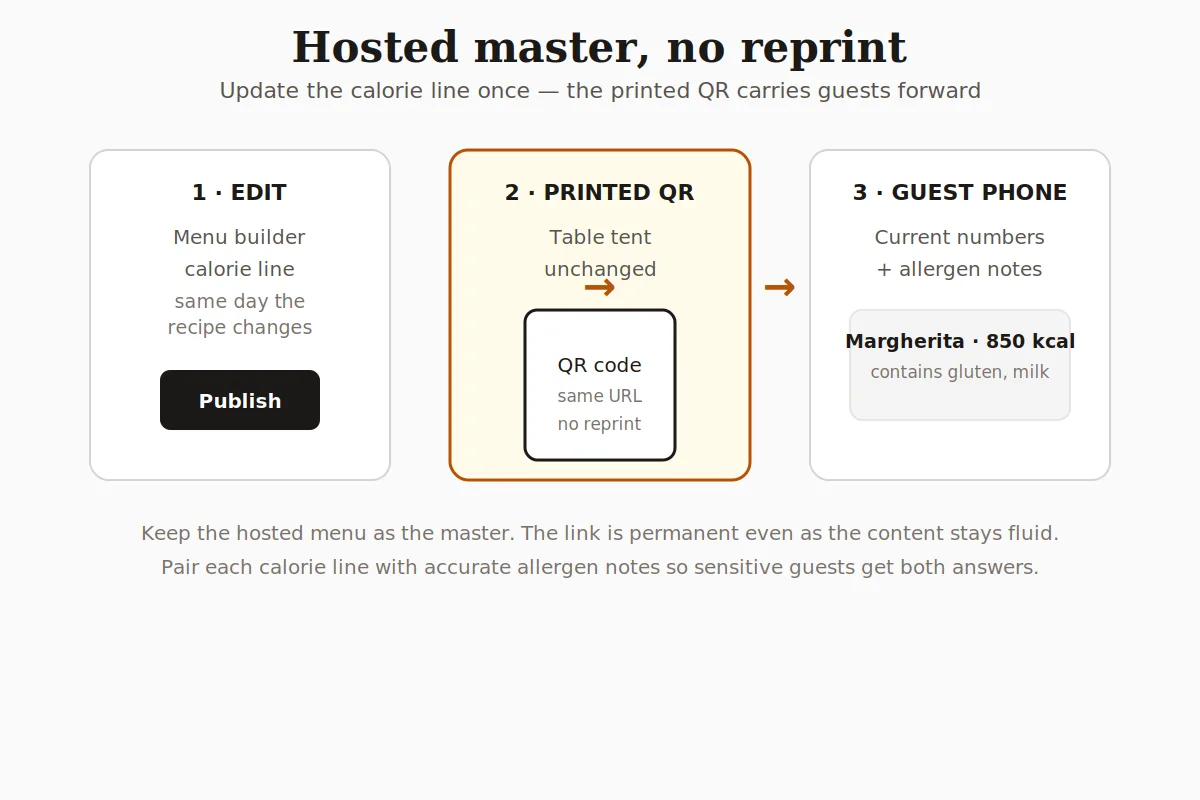
Menus change; nutrition lines go stale faster than prices because recipes drift. A new cheese, a heavier pour, a different base — each shifts the number while the printed line stays put. Keep the hosted menu as the master: update the calorie line the same day the recipe changes, and let the QR on the printed menu carry guests to the current numbers. The printed code points to a fixed address, so every table tent brings up the revised figures with no reprint and no crossed-out lines.
The update routine in How to Update a Restaurant Menu Without Reprinting works unchanged: edit the source once, publish, and the hosted page carries the change everywhere the menu appears. Pair nutrition lines with accurate allergen notes — the allergen menu glossary entry explains the vocabulary — so sensitive guests get both answers in one place. Start with your five best sellers, verify each number, publish, and extend to the rest of the menu. Build it in the menu builder and your nutrition lines stay in sync everywhere the menu appears.
See: How to update a restaurant menu, What is an allergen menu.
Quick steps
- 1
Pick the basis
Show calories per serving as served for a standard build, agreed with the kitchen before anything is published.
- 2
Verify each number
Use supplier sheets for bought-in items and a reputable calculator with actual quantities for house dishes; omit what you cannot verify.
- 3
Lay out one quiet line
Set name, one concrete description, price, and a smaller quieter calorie figure; shorten descriptions before shrinking type.
- 4
Publish from the hosted master
Build it in the menu builder, update the line the day a recipe changes, and let the printed QR carry guests to current numbers.
Frequently asked questions
- What nutrition information should a restaurant menu show?
- For most independent restaurants, calories per dish as served are the useful core. Full nutrient panels belong on packaged food, where they do not bury the dishes. State the basis plainly and keep the figure in a smaller, quieter style next to the price.
- Where do I get reliable calorie numbers?
- Use the supplier's nutrition sheet for bought-in items and a reputable recipe calculator with your actual ingredients and quantities for house dishes. Round sensibly, never copy another restaurant's number, and leave off any dish you cannot verify.
- Do I need to reprint when a recipe changes?
- No, if the hosted menu is the master. Update the calorie line the day the recipe changes and publish; the printed QR points to the same address, so every table shows the current numbers with no reprint.